
Fall/Winter 25 Preview
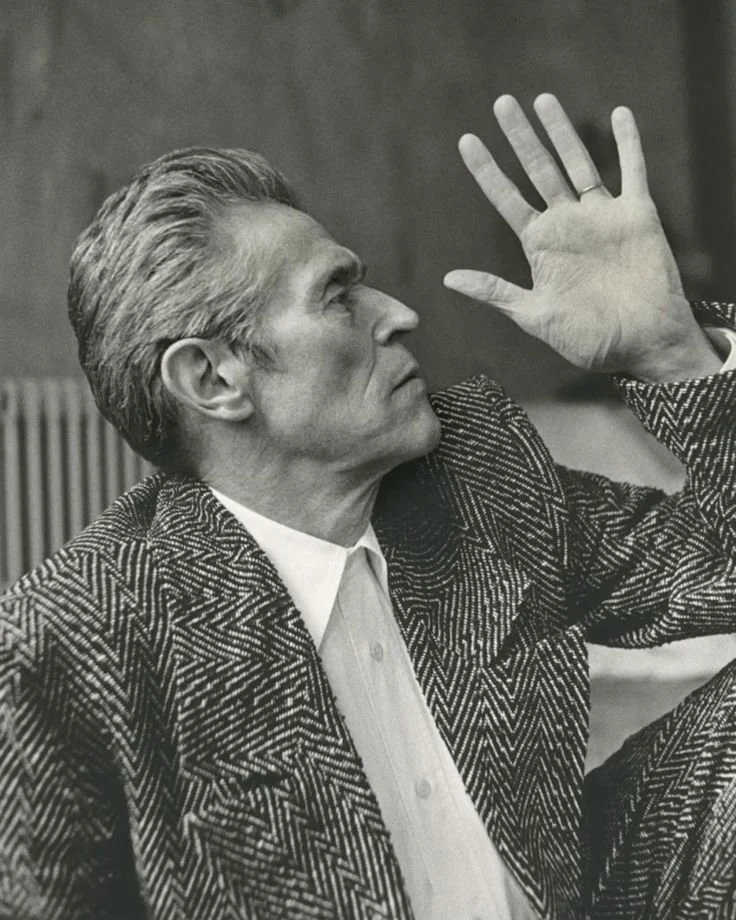
Glancing through the imageries of Willem Dafoe—yes, those uncanny portraits, equal parts strange and magnetic—we were reminded of the sheer power of quirkiness. Unapologetically bold, sensual, and utterly memorable, it is the sort of imagery that lingers in the mind and tugs at the imagination, an impact that both draws and inspires. As I was swirling my glass during late evenings, fathoming, thoughts have gotten vivid. I’ve started picturing his evil smile as Green Goblin in Toby Maguire’s Spiderman, also his psychotic behaviours in The Lighthouse—in which, it led me to create this fictional character that has a two-sided split personality. In my dreams, he is, on one hand, someone like a Batman who inherited his family mansion, yet he has his dark side, whether it be his heroic self, or the opposite way, being this supervillain. With that, let us leave it to our imagination.

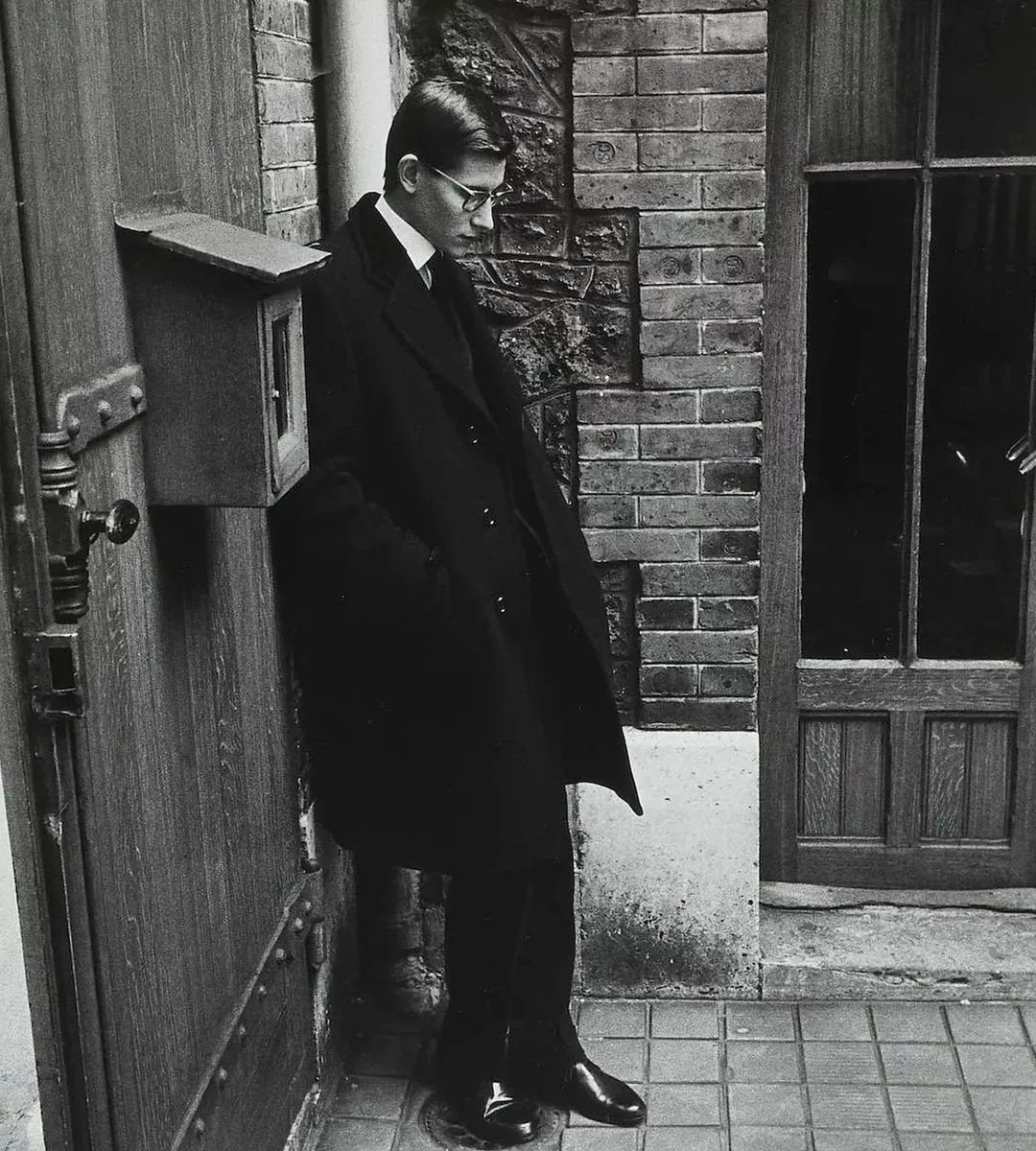
On the note of a mansion, the ghosts of Yves Saint Laurent whisper here too. Those old photographs of him, framed in sweeping mansions and opulent estates, carry a peculiar tension: grandeur and intimacy, defiance wrapped in elegance.
I wanted to convey darkness with this season. And I wanted to set foot in a specific type of architecture, which was something of a ’Tudor’ style.
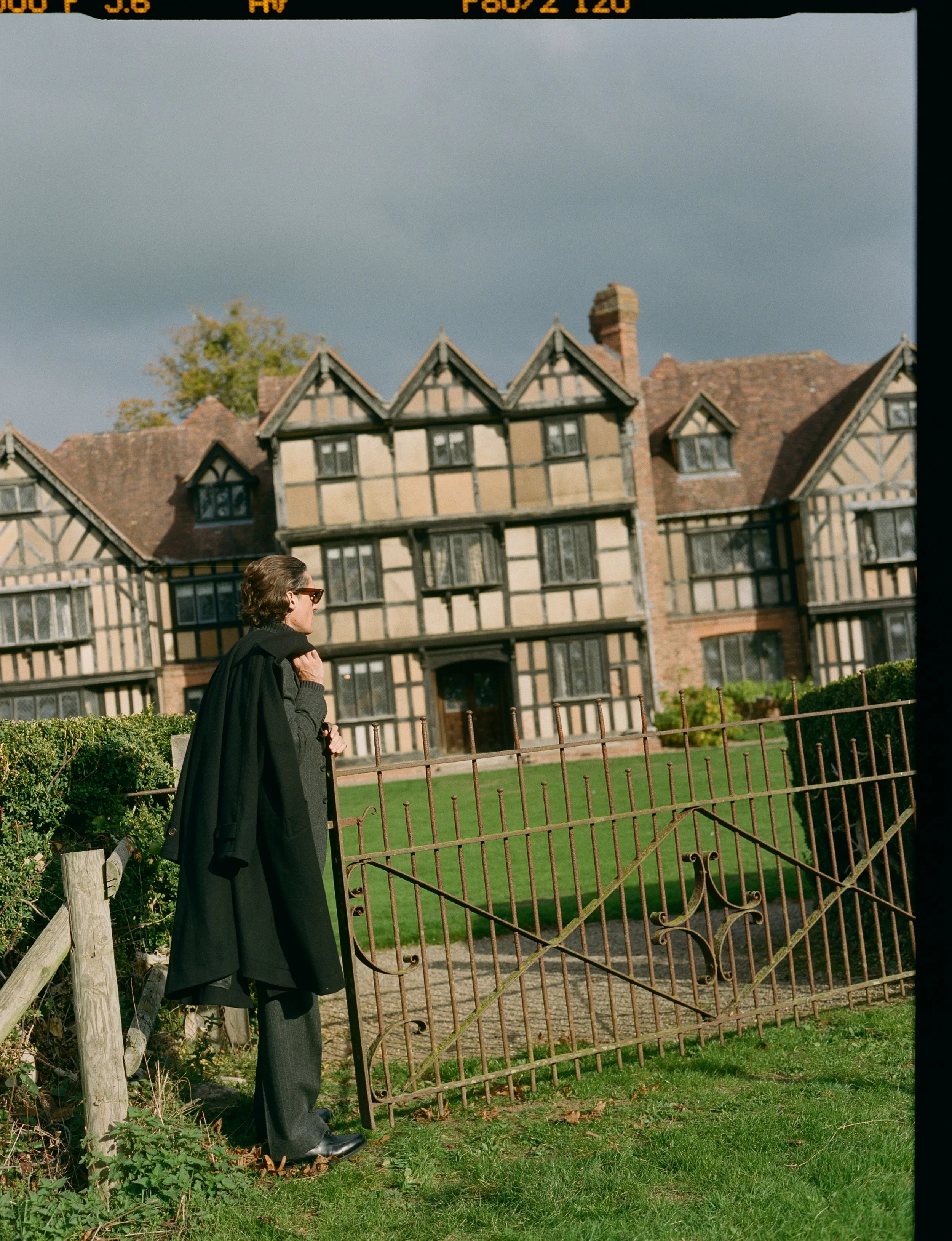
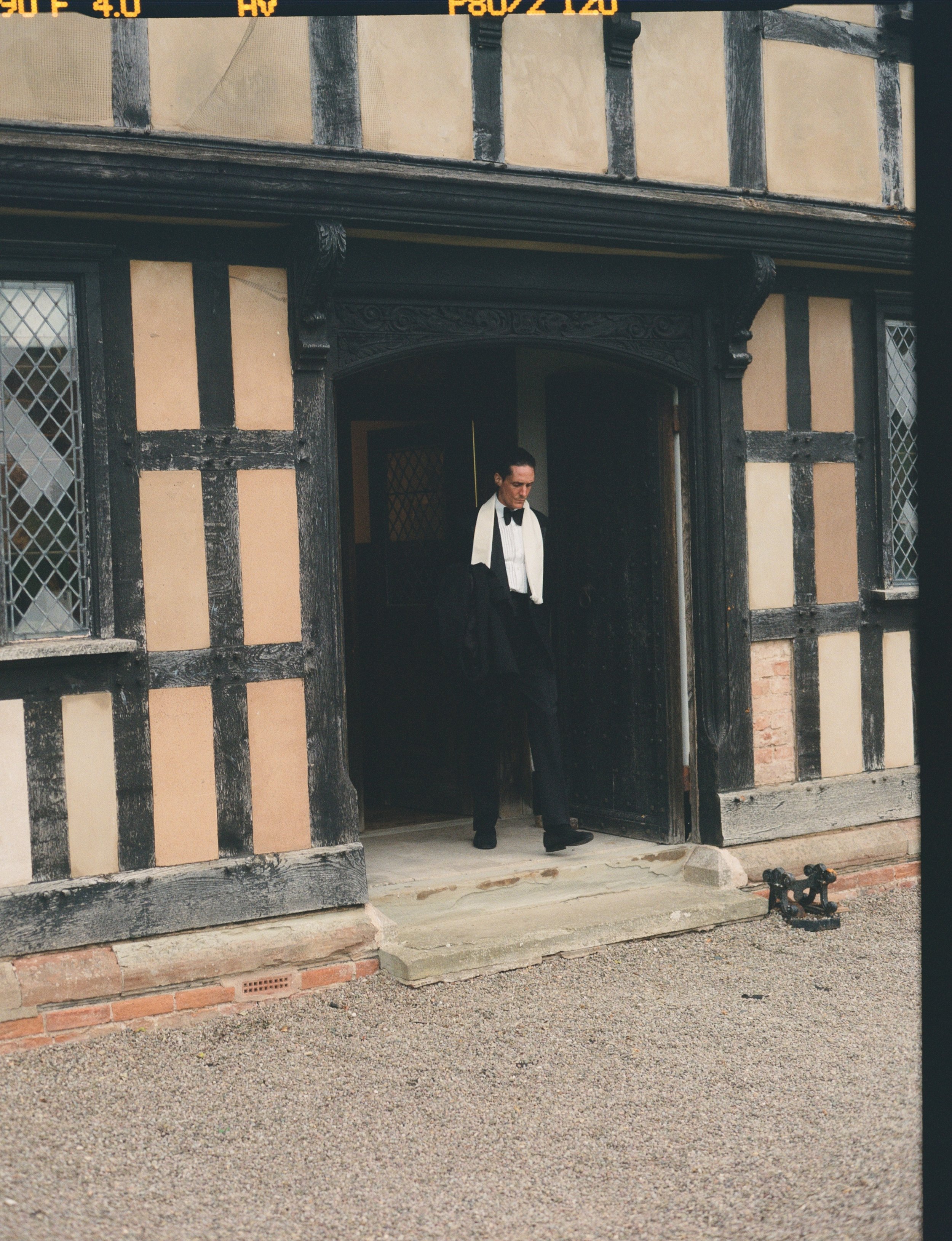
Recalling the first time I encountered a Tudor-style house, I didn’t have the language to name what I was seeing. What struck me, instead, was a mood: a sense of shadow and intrigue, sharp silhouettes etched against the sky. Steep pitched roofs, never hip but gabled, timber frames sliced across whitewashed walls, wattle and daub infills forming a stark monochrome. It felt less like a home than a stage set—mysterious, villain-like, almost antagonistic in its beauty. I think it was slightly Gothic, Nosferatu-esque but also not quite. It wasn’t as ‘vulgar’ or ‘literate’, slightly more romantic and closer to normalcy, and I found it quite hard to articulate.
Looking closer, that impression wasn’t unfounded. Tudor architecture arrived just as Perpendicular Gothic was drawing its final breath. The Gothic style—running from 1375 to 1530—was marked by vertical lines, soaring windows, and a sense of weightlessness through height. Tudor, emerging with the dynasty in 1485, carried fragments of Gothic into a new form, blending late medieval solemnity with early Renaissance restraint. The result was genre-bending before the term existed: architecture as hybrid, full of tension between decay and emergence, austerity and ornament.
For us, that tension became the guiding spirit of this season. The mood is gothic, brooding, but not nostalgic. It is about the dramatic interplay of contrast—dark panels against pale surfaces, soft textures clashing with sharp outlines. In cloth, this becomes heavier weaves, deepened navies, shadowed greys, subtle tones that shift with the light. In silhouette, it manifests through sharper shoulders, fuller trousers, layers that echo the nesting rooms of an old estate.
Yet, like Art Nouveau or even Gothic Revival, we find liveliness within solemnity. The season isn’t one thing—it bends genres, mixes moods. It is at once grand and irreverent, sombre and sensuous. It borrows from architecture’s stark contrasts and transforms them into garments designed to inhabit twilight spaces.
This is tailoring for shadows, for mansions, for the quiet theatre of night.
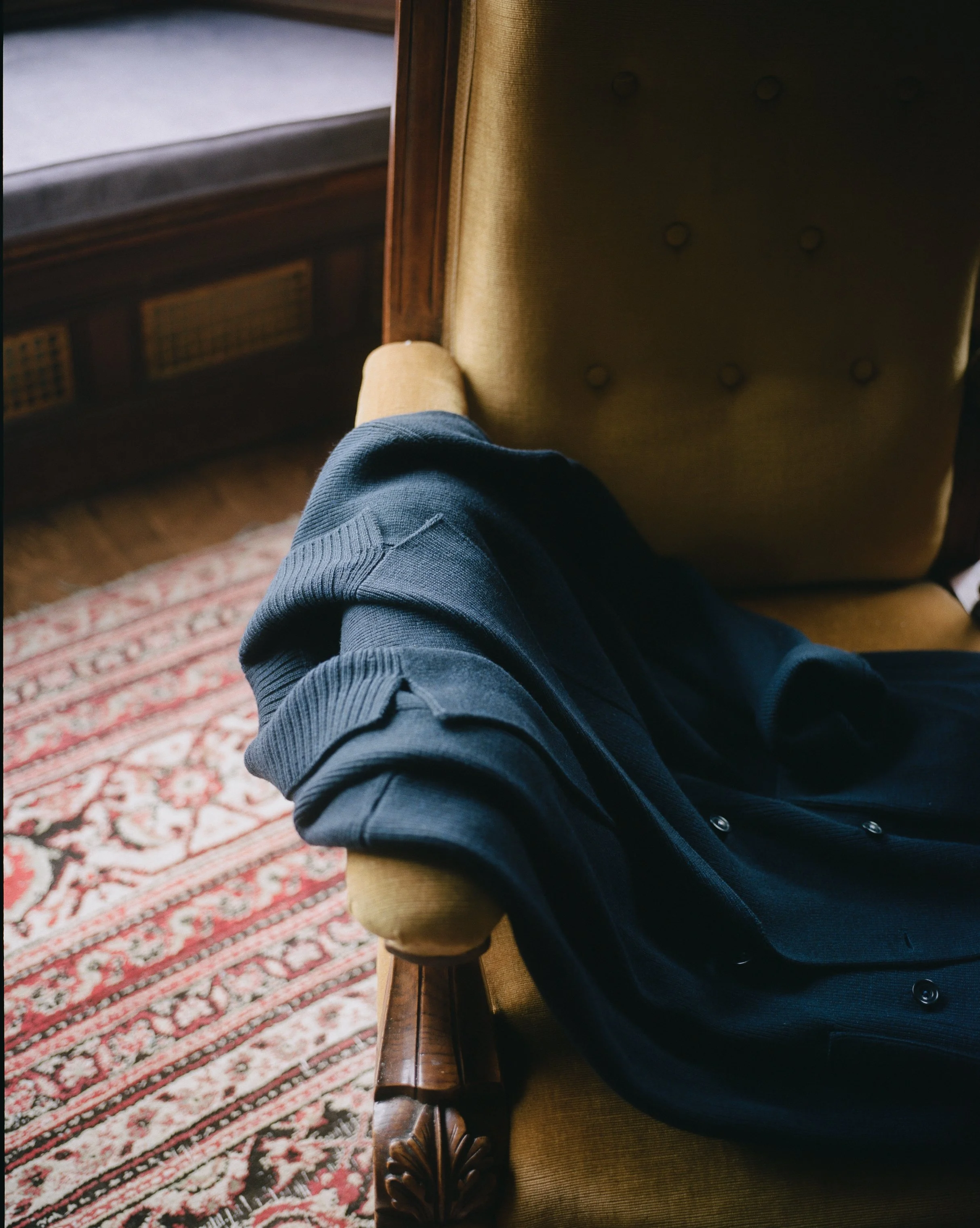
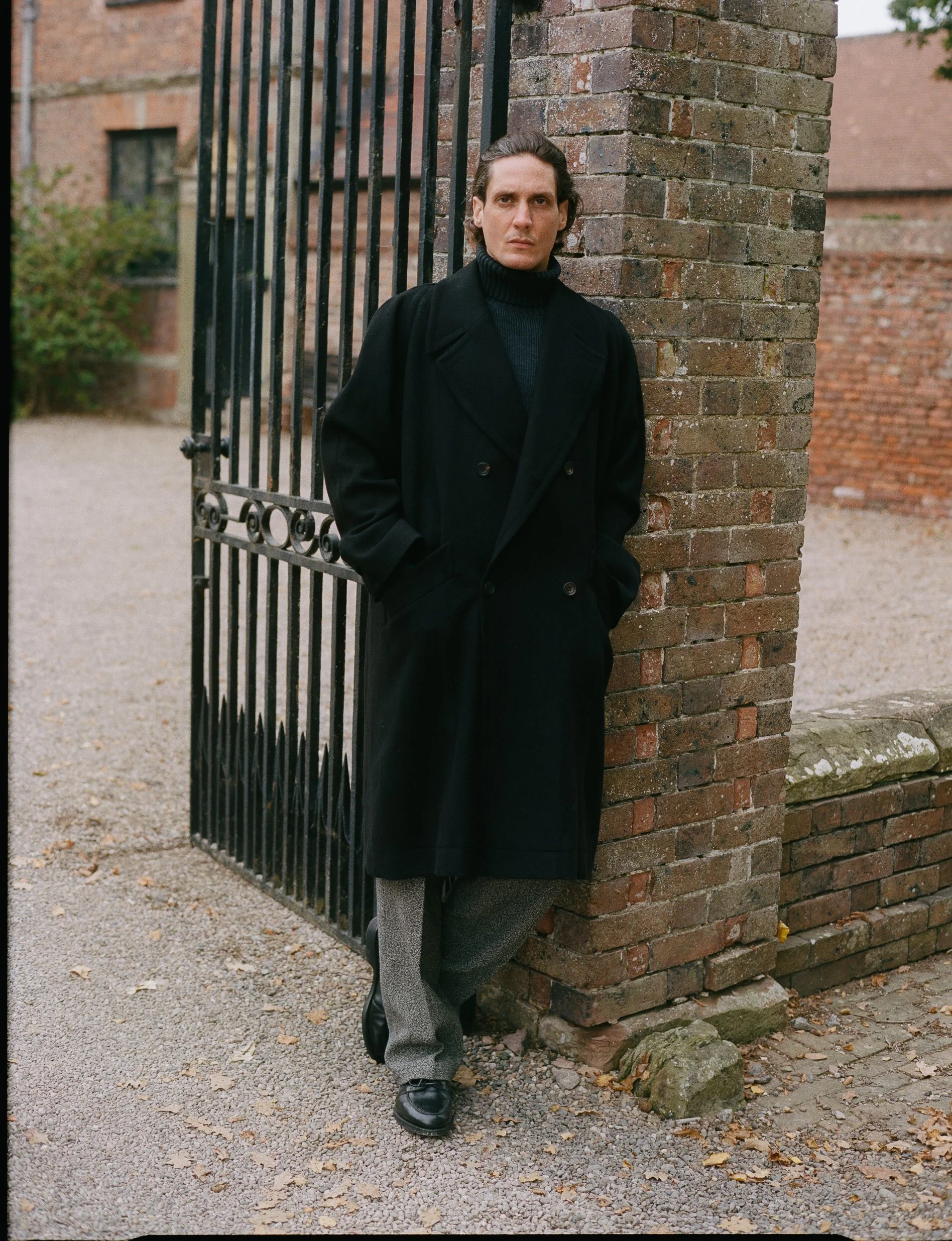
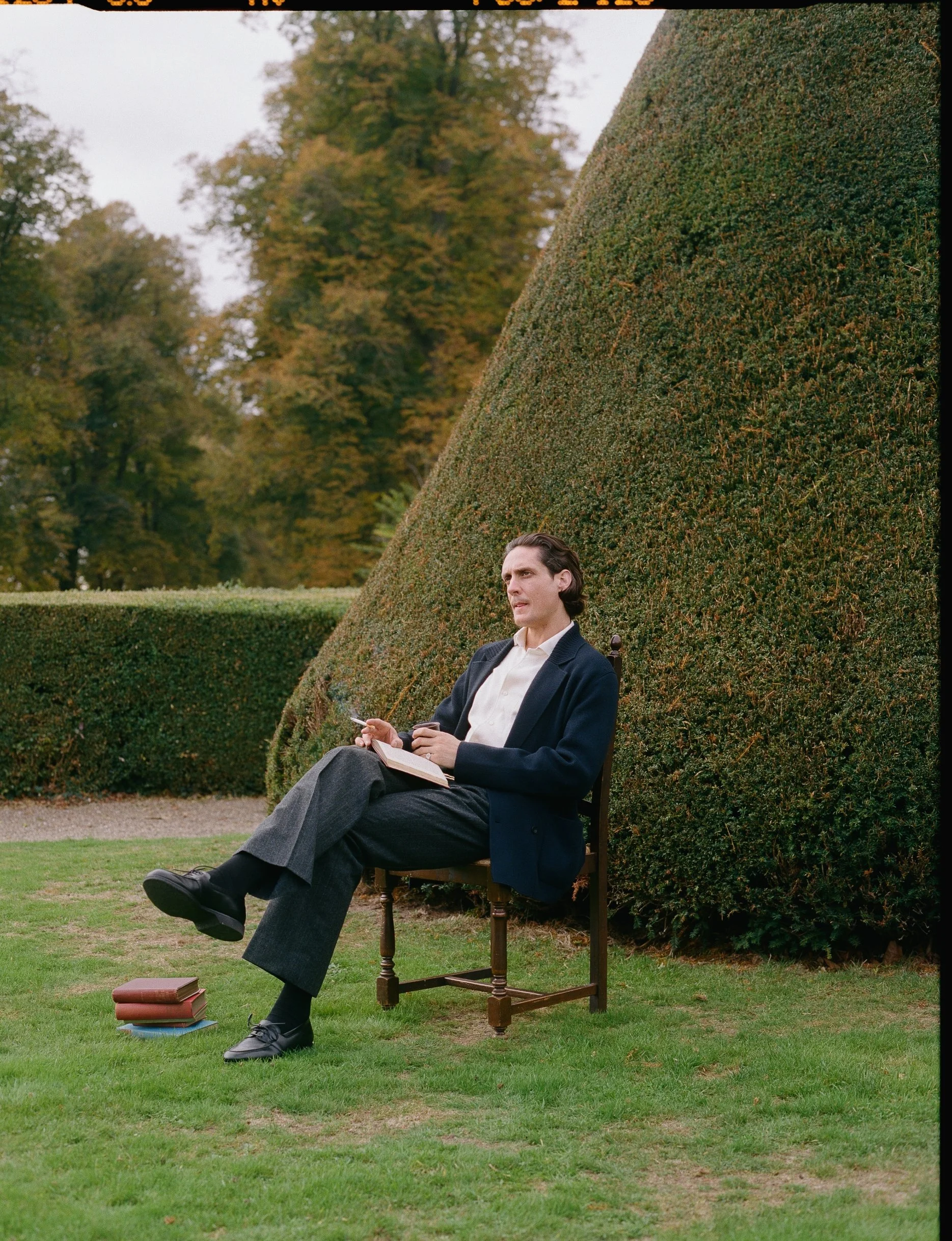
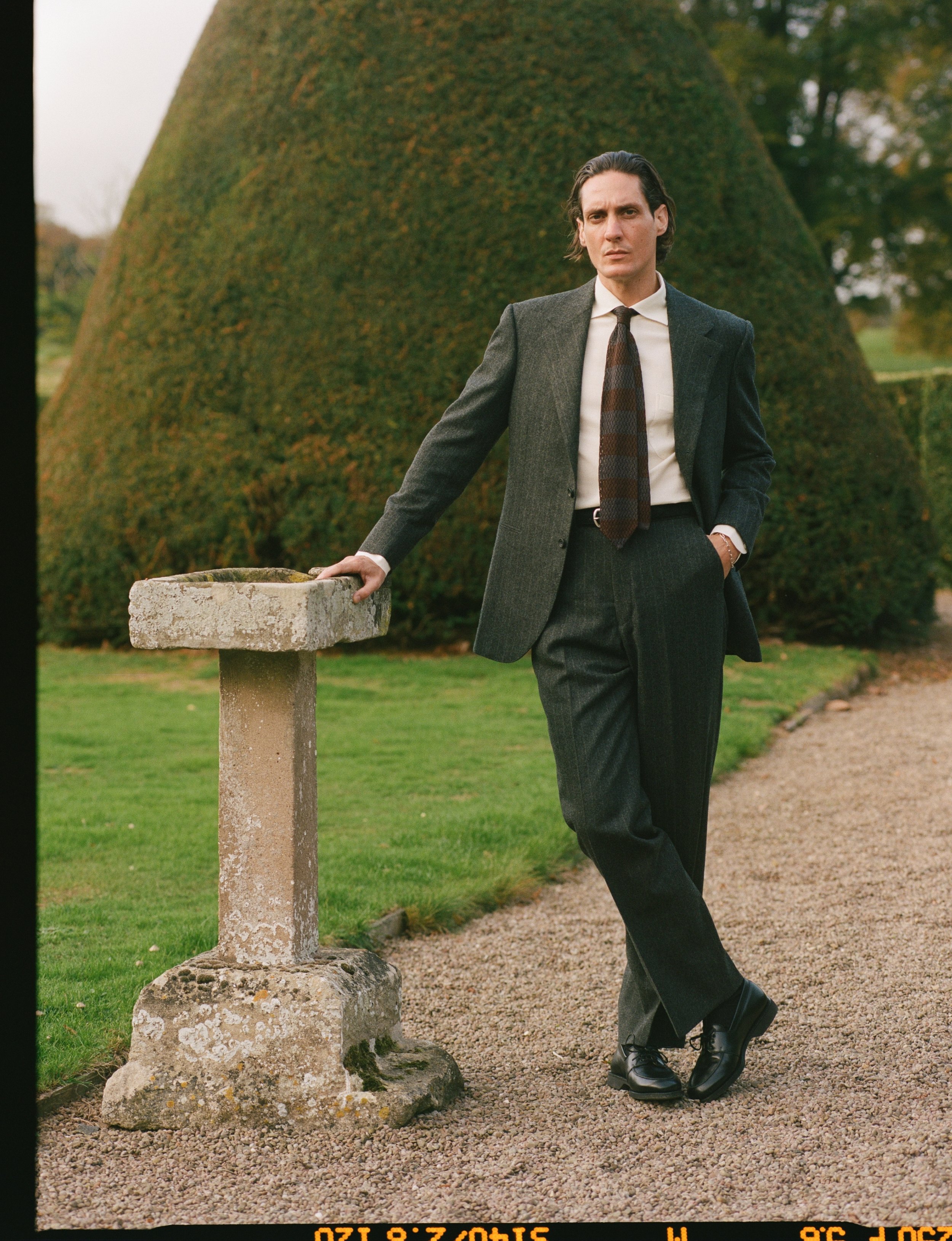
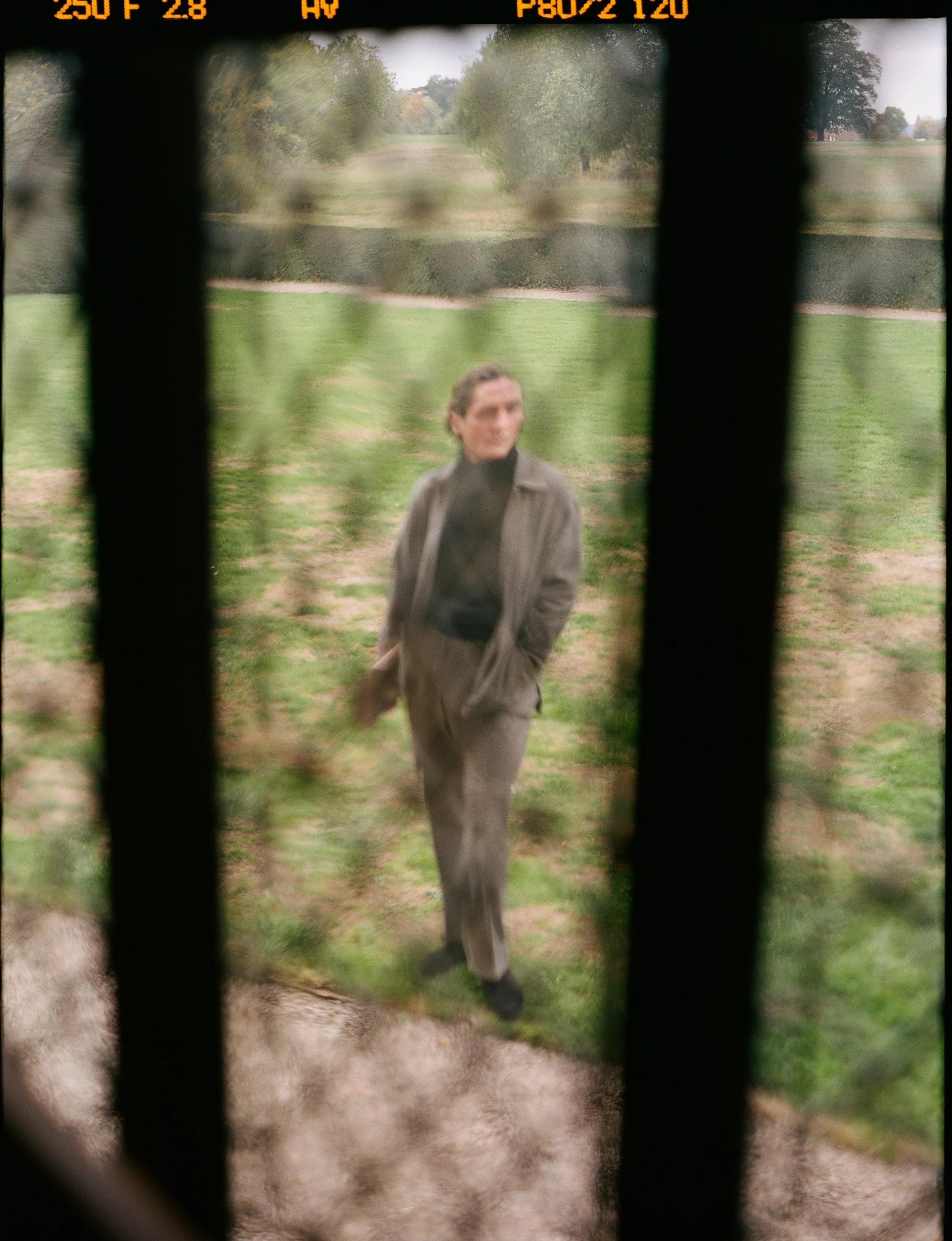
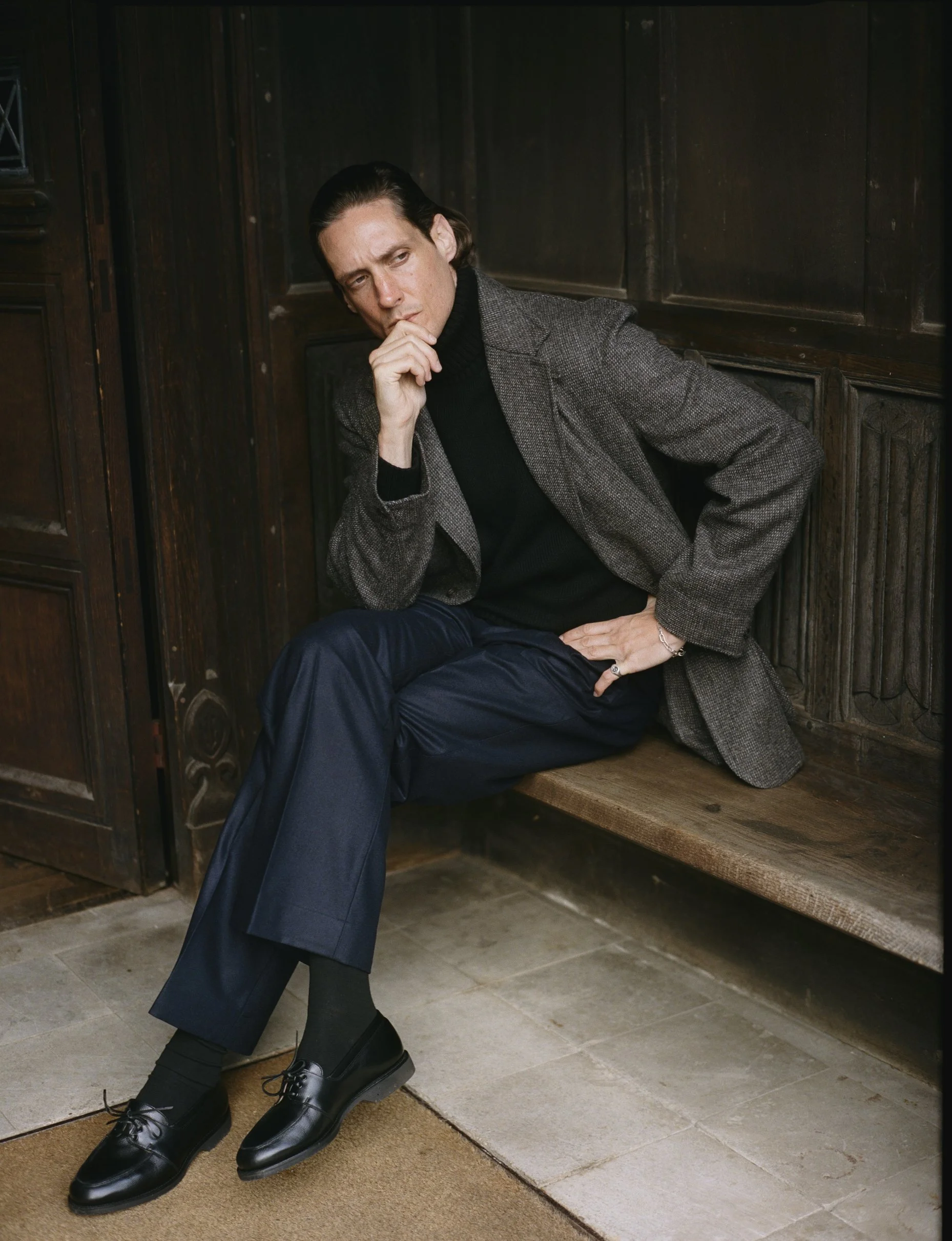
Fall/Winter descends with a chilling message, and the season reveals its darker side. It will be a complete shift in colour palette, from our usual warmer hues to this season’s navy and greys. Campaign releasing on November 6 (Thursday) at 12pm GMT, here again at The Anthology.
Photography by Alex Natt, cinematography by Ben Lloyd Photography, featuring our muse of the season, Cillian Sheil.